Welcome to Week 2 of my Games Development Diary. The focus of this week is to analyse a 2D game to which will assist me with developing the project later through knowing how to create specific game mechanics and what mechanics work well for that game genre. The game that I will analyse is Stardew Valley to which will be done by looking at two different lenses mentioned within a book called “The Art of Games Design: A Book of Lenses” by Jesse Schell.
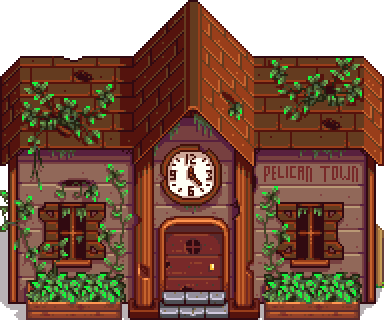
The first lens I will be looking at is “The lens of Flow” #18 (Schell, P 122), which considers what is holding to the player focus. The focus around the player is giving them clear goals toward the game’s progression, no distractions that will steal the player focus, direct feedback on actions made and finally, a continuously challenge by adding additional challenges that the player can take on. For example, since Stardew Valley is an endless game, there are some goals that the player can work toward to opening new features around them that they can use with this the Community Center. The Community Center is an abandoned building that the player is introduced to them early within the game. They can explore and importantly discover the many different objectives that they can fulfil.
The goal is relatively simple, with the player tasked to deliver a set of varying items to hand into each panel within a group around the building. These groups are referred to as “Bundles”, and once all the panels are completed for that set bundle, that part of the Community Center is fully restored, and the player is rewarded. The reward that the player will obtain in the game is a new feature later upon completing the entire set that they can use moving forward, along with some small reward to aid to assist them in getting the remaining items within that bundle.
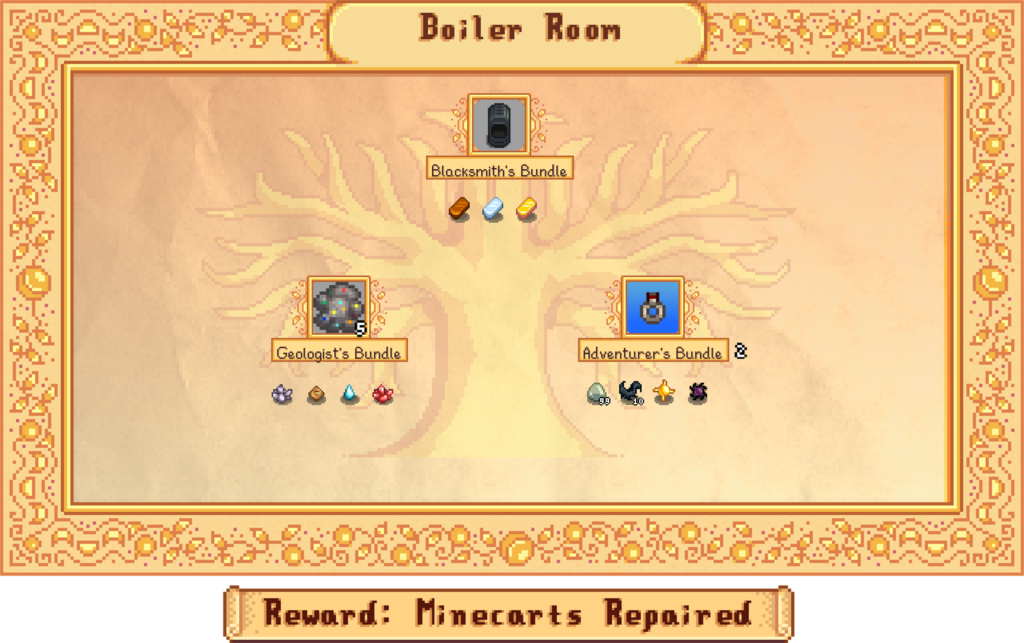
The goal of this is apparent because it makes the player remember precisely what they will need to look for around the game’s world and figure out how to obtain said items. For example, completing the blacksmith set within the Boiler Room will consist of the player finding ore and identifying the need to create the bar using a furnace. However, the player works out that to obtain ore, they will need to explore the mines within the game world to deliver various challenges through defeating enemies that get progressively harder to fight, such as having more health and causing more damage. It does become necessary to deal with these challenges because the deeper the player goes into the mines, the more valuable ore such as gold can be found in the latter parts.
However, suppose the player wants an easier time to explore the mines. In that case, they can upgrade their tools, equipment, and combat levels to effectively survive longer and get through the mines quicker. This does come at the cost of being distracted from the primary goal since the player may need to make money by doing other tasks to get the equipment and fighting weaker to get better stats. While this distraction may put the player off the current path that they were focusing on, fortunately, this does have a positive effect in the end. The distraction is likely to tie to other main goals simultaneously since the player could be fishing to make money and complete the fishing bundles simultaneously. Doing this also allows the player to improve their skills in other areas in the game and help achieve their main focus path later.
From analysing the first lens, the second lens is “The lens of Freedom” #71 (Schell, P 284), which looks at when the player feels a sense of freedom around the game by providing entertainment forms. To achieve the Lens of Freedom to the game’s design, the player needs to feel as free as possible to the game’s world. The lens design is done when the player has any freedom of action to interact with the game’s world, their constraints, and any unique places that the player can feel even more free or overwhelmed.
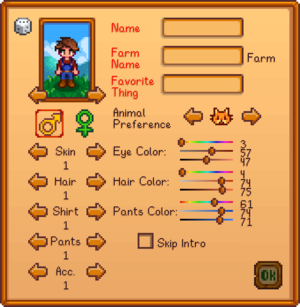
For example, Stardew Valley is an open-world game where players can customise and design their farm however they want it to be. Before starting their game, the player can create their character and choose a specific farm map to play on. The reason to provide these customisation options to the player is to allow them to role-play as any characteristic that they want to imagine, such as themself and choosing a farm map allows tailoring toward a skill area that they enjoy with Stardew Valley. For example, if the player enjoys combat in the game, they can choose the wilderness map to allow enemies to spawn on their farm at night to give them their favourite skill they enjoy doing on the farm. However, the player is constrained from changing their farm map due to the technical limitation of transferring all placed objects and buildings currently built on the farm. This limitation can be overcome by creating a new save within the game.
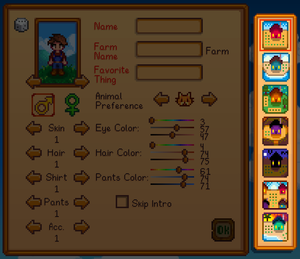
Lastly, the amount of space that the player is given within their farm is vast, which some players may find it overwhelming at times. The design choice around this is due to allowing the player to have much creative freedom to plan how they want the farm’s layout to be, such as where each building should be placed and where to plant their crops. With this large amount of space, this sense of freedom can allow for many different farm layouts to be designed and increase the game’s replayability.
From analysing the two different lenses through the A book of Lense and comparing these to Stardew Valley, I feel that this will help me within the future with the 2D project to which I can consider how clear the goal should be for the player and what amount of freedom they have during gameplay.
Bibliography:
Concerned Ape (2012) Stardew Valley [Video Game]. Concerned Ape.
Schell, J (2008) The Art of Games Design: A Book of Lenses. Available at: https://www.vlebooks.com/Vleweb/Product/Index/39579?page=0 (Accessed: 20 October 2021.)
Stardew Valley Wiki (2021) Bundles. Available at:
https://stardewvalleywiki.com/Bundles (Accessed: 20 October 2021.)
Stardew Valley Wiki (2021) Community Center. Available at:
https://stardewvalleywiki.com/Community_Center (Accessed: 20 October 2021.)
Stardew Valley Wiki (2021) The Farm. Available at:
https://stardewvalleywiki.com/The_Farm (Accessed: 20 October 2021.)